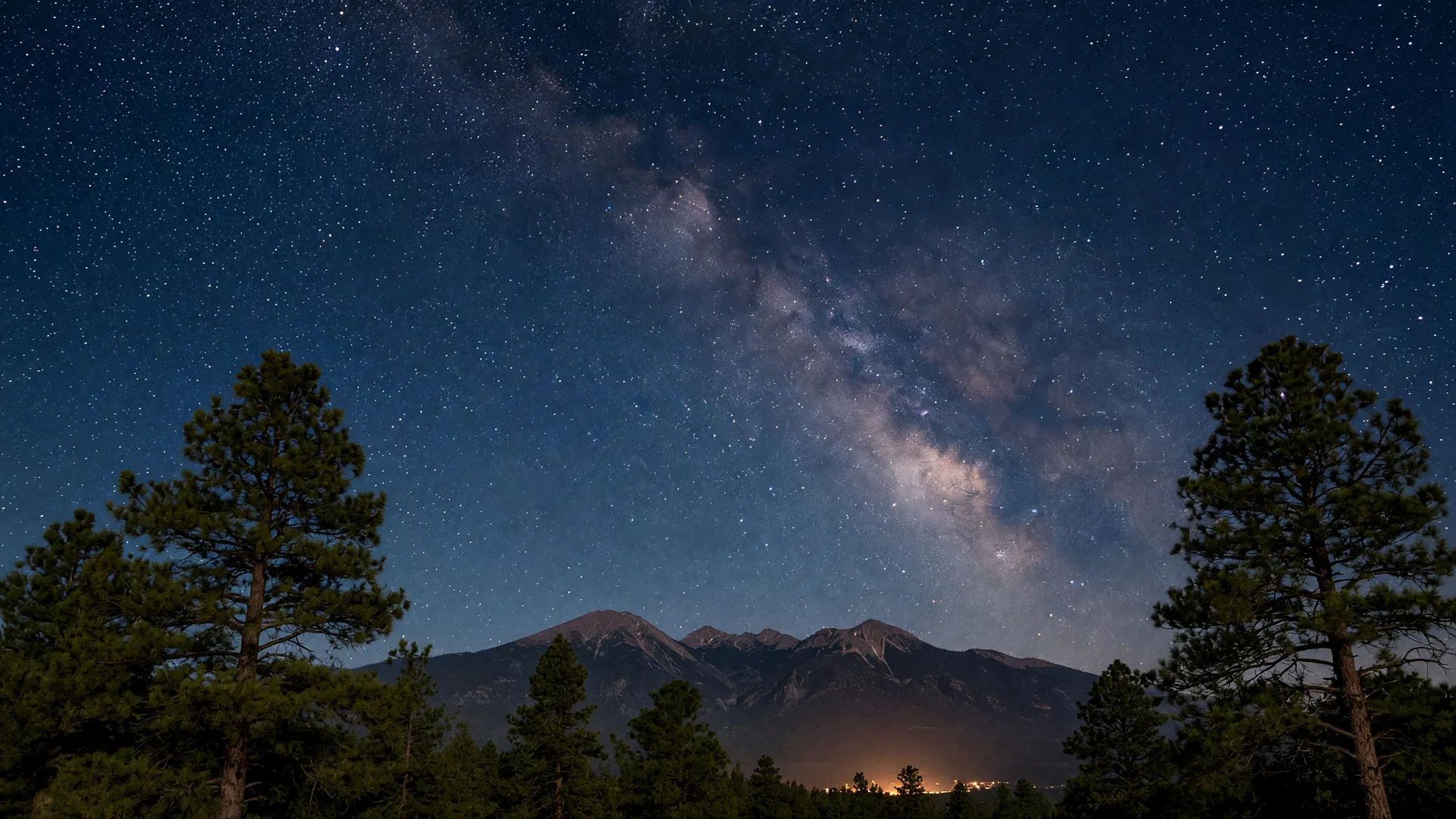
Flagstaff is the world's first International Dark Sky City, a title it has held since 2001, and it is the reason the Milky Way still shows up clearly over a town of its size. That designation is not a marketing slogan: it is the product of more than half a century of lighting rules, and it makes the night sky one of the single most distinctive things about living here. If you are moving to Flagstaff, the astronomy scene is worth understanding before you arrive.
Why Flagstaff protects its night sky
Flagstaff's dark-sky story predates the modern movement. The city passed one of the first outdoor lighting ordinances in the country back in 1958, aimed at controlling searchlights so they would not wash out the view from the observatories on Mars Hill. In 2001, the International Dark-Sky Association recognized the result and named Flagstaff the world's first International Dark Sky City. The designation has since grown into a global program with more than 200 certified places, but Flagstaff was the first.
The commitment has only deepened. The city and the Flagstaff Dark Skies Coalition marked the 25th anniversary of the designation in 2026, and DarkSky International named Flagstaff its Dark Sky Place of the Year. For anyone moving here, that means the night sky is not an accident of location: it is protected by local policy that residents actively defend.
Lowell Observatory: the heart of Flagstaff astronomy
Lowell Observatory sits on Mars Hill just west of downtown, founded in 1894, and it is the reason Flagstaff became an astronomy town in the first place. It is a National Historic Landmark and one of the oldest observatories in the country. Its most famous moment came on February 18, 1930, when Clyde Tombaugh discovered Pluto there using the 13-inch astrograph, the telescope now known as the Pluto Discovery Telescope.
The observatory is far from a relic. It still does active research, including the discovery of an exoplanet in 2007, and its historic 24-inch Clark Telescope was used to train the Apollo 11 astronauts. Best of all for newcomers, it runs public evening programs with telescope viewing most nights, which makes it the easiest and most reliable place to start stargazing in Flagstaff.
The best places to stargaze around Flagstaff
You do not need a ticket to see a great sky in Flagstaff. The town sits at about 7,000 feet, and the dark-sky rules keep the glow low. These are the spots locals actually use.
- Buffalo Park on McMillan Mesa: free, open 24/7, and just a few minutes from downtown, with a wide-open panoramic sky and the site of the annual Flagstaff Star Party.
- Lake Mary Road and Anderson Mesa: an easy drive south of town with some of the darkest, most professionally validated skies in the area.
- Sunset Crater Volcano and Wupatki National Monuments: national-monument settings with dark-sky programs and volcanic landscape to frame the view.
- Arizona Snowbowl: head up Fort Valley Road to the high-elevation meadow below the parking lot for a big, unobstructed sky.
- Lockett Meadow and the Humphreys Peak area: a more remote, forested option for a fully dark horizon.
What to know before you go stargazing in Flagstaff
- Dress for winter even in summer: nights at 7,000 feet get cold fast, and the clear skies that make great stargazing also mean cold air. Layers and a hat go a long way.
- Check the moon phase: a full moon washes out the fainter stars, so the darkest skies come near the new moon.
- Give your eyes time: it takes about 20 minutes to fully adapt to the dark, and a red-light headlamp preserves your night vision.
- Respect the dark: keep lights low and pointed down, and leave no trace, so the sky stays dark for everyone.
What dark skies mean for buying a home in Flagstaff
Dark-sky rules are part of everyday life here, and they touch real estate too. Outdoor lighting on homes and businesses is expected to be shielded and downward-facing, which is a small adjustment for newcomers used to bright floodlights. Most people find it is a trade they are happy to make for a sky full of stars every night. Mike has lived in Flagstaff for 26 years and knows which neighborhoods and lots give you the best views of both the Peaks and the night sky.
Why is Flagstaff a dark sky city?
Flagstaff was named the world's first International Dark Sky City in 2001 by the International Dark-Sky Association, in recognition of more than half a century of outdoor lighting ordinances that keep the night sky clear. It passed one of the first lighting ordinances in the country in 1958.
Where can I stargaze in Flagstaff?
Lowell Observatory runs public evening programs, and free spots include Buffalo Park, the Lake Mary Road and Anderson Mesa area, Sunset Crater and Wupatki monuments, and the meadow below Arizona Snowbowl.
Can you see the Milky Way in Flagstaff?
Yes. Flagstaff's dark-sky protections keep light pollution low enough that the Milky Way is regularly visible over the town, which is exactly why it holds the first International Dark Sky City designation.
Is Lowell Observatory worth visiting?
Yes. It is a National Historic Landmark where Pluto was discovered in 1930, and it runs public evening telescope programs most nights, making it the best starting point for stargazing in Flagstaff.
Sources and further reading
Flagstaff's official Dark Sky program (City of Flagstaff)
Lowell Observatory official site
Flagstaff Dark Skies Coalition
Current Flagstaff market data from the Flagstaff Property Experts hub
Keep exploring
The rest of the Flagstaff picture
Still reading? Ask instead.
Want this answer tuned to your situation?
Mike will run your actual budget, commute, and timeline and send back the honest read, plus the relocation guide when you want it.
Ask Flagstaff a questionKeep reading
Flagstaff Cost of Living: The Numbers Worth Knowing Before You Move
2026-09-11 · 7 min
Flagstaff vs. Phoenix: The Cost-of-Living Breakdown
2026-09-11 · 6 min
Flagstaff Winters: Snow, AWD, and Living With the Season
2026-09-11 · 6 min
What's New and Coming to Flagstaff: Food, Hotels, and Housing
2026-09-11 · 6 min
Fall in Flagstaff: Aspens, Events, and the Season Before the Snow
2026-09-15 · 7 min
Brandy's Restaurant & Bakery Is Moving Into Proper Meats + Provisions
2026-09-15 · 3 min
Flagstaff Schools: A Parent's Guide to Moving With Kids
2026-09-16 · 6 min
What's Happening in Flagstaff: September 18-20, 2026
2026-09-17 · 5 min
Jobs and Remote Work in Flagstaff: Employers, Salaries, and the Internet Reality
2026-09-18 · 7 min
Things to Do in Flagstaff: Hikes, Lakes, Skiing, and Stargazing
2026-09-22 · 8 min
Healthcare in Flagstaff: Hospitals, Urgent Care, and What to Know Before You Move
2026-09-23 · 8 min
Flagstaff Breweries: The Local Craft Beer and Mead Map
2026-09-25 · 6 min
What's Happening in Flagstaff: September 22-27, 2026
2026-09-22 · 5 min
Best Neighborhoods in Flagstaff: Where to Live for Your Lifestyle
2026-09-29 · 8 min
Flagstaff Entertainment: Live Music, Movies, Nightlife, and the Arts
2026-09-30 · 8 min
Where to Eat in Flagstaff: The Local Dining Map
2026-10-02 · 8 min
Day Trips from Flagstaff: Sedona, the Grand Canyon, and the Red-Rock Country Around Town
2026-10-06 · 7 min
Flagstaff Utilities and Internet: What to Set Up Before You Move
2026-10-07 · 7 min